Would You Flag This? The Hidden Dangers of Overheated Electrical Connections
Why a small electrical defect can become a serious safety concern
By Mahon Services | Inspect • Educate • Protect
Imagine walking through a home you’re considering purchasing. The lights work, the outlets appear functional, and everything seems to be operating normally.
But what if a potentially serious electrical problem is hiding behind the electrical panel cover?
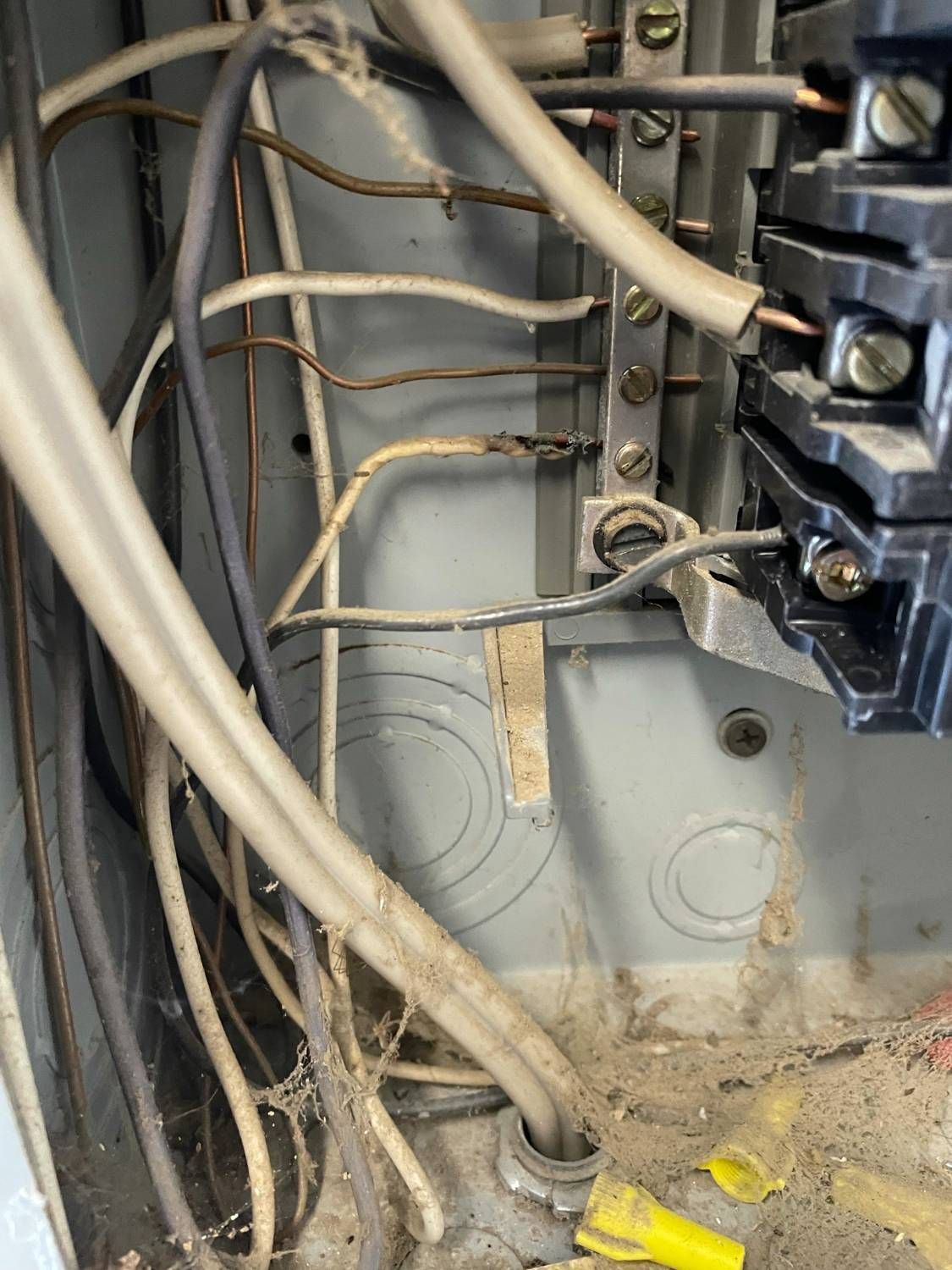
During a recent Mahon Services home inspection, we discovered an overheated electrical conductor inside the home’s electrical panel.
At first glance, this might not seem like a major concern. After all, the electrical system may still be functioning, and the homeowner might have no idea there’s a problem.
However, overheating at electrical connections is something we take seriously.
Electrical systems can appear to operate normally even when dangerous conditions are developing behind the scenes.
Let’s take a closer look at what we found, why electrical connections overheat, and what homebuyers should understand about these types of defects.
What Did We Find During the Inspection?
During our evaluation of the home’s electrical panel, we observed visible heat-related damage to an electrical conductor near its connection to the neutral bus bar.
The conductor’s insulation showed signs of deterioration and discoloration consistent with overheating.
This is an important finding because electrical conductors and their connections are designed to safely carry electrical current under normal operating conditions.
When excessive heat develops, it can damage the insulation surrounding a conductor and potentially affect nearby electrical components.
The visible damage is a warning sign that something may not be functioning as intended.
However, it’s important to understand that the appearance of overheating doesn’t necessarily tell us exactly what caused it.
Determining the underlying cause requires further evaluation by a qualified electrician.
Why Do Electrical Connections Overheat?
Electrical connections can overheat for several reasons.
Some of the most common causes include:
1. Loose Electrical Connections
One of the more common causes of localized overheating is a loose electrical connection.
When a conductor isn’t securely connected to its terminal, electrical resistance can increase at the connection point.
As current flows through that resistance, heat can develop.
Over time, excessive heating can damage the conductor, insulation, terminal, and surrounding components.
In some cases, the connection may continue to deteriorate, creating additional resistance and heat.
2. Improper Electrical Connections
Electrical components are designed for specific types and sizes of conductors.
Using an incompatible terminal, improperly preparing a conductor, or failing to tighten a connection according to the manufacturer’s specifications can create conditions that contribute to overheating.
Even when the electrical system appears to function normally, an improperly installed connection may present a safety concern.
3. Excessive Electrical Loads
Electrical conductors and components are designed to carry specific amounts of current.
When conductors are subjected to loads beyond their rated capacity, excessive heating may occur.
Properly selected overcurrent protection is intended to help protect conductors from overloads and short circuits.
However, not every overheating condition will cause a circuit breaker to trip.
For example, a high-resistance connection may generate significant localized heat while the circuit current remains below the breaker’s trip threshold.
This is one reason visual evidence of overheating should never be ignored simply because the electrical system is still operating.
4. Deteriorated or Damaged Components
Electrical components can deteriorate over time.
Corrosion, previous overheating, improper modifications, and damaged conductors can all affect the integrity of electrical connections.
These conditions may increase resistance or otherwise compromise the connection.
Why Is an Overheated Electrical Connection Dangerous?
When we identify evidence of overheating inside an electrical panel, our primary concern is safety.
Electrical connections are intended to remain within acceptable operating temperatures.
When excessive heat develops, several potential problems can occur.
Insulation Damage: Excessive heat can cause conductor insulation to become brittle, discolored, cracked, or otherwise deteriorated. Damaged insulation may increase the potential for unintended electrical contact.
Electrical Arcing: Certain loose or deteriorated connections can develop electrical arcing. Arcing produces extremely high temperatures and may damage electrical components or ignite nearby combustible materials.
Component Failure: Prolonged overheating can damage terminals, bus bars, conductors, and other electrical components, potentially resulting in electrical failure.
Fire Hazards: In severe cases, overheating or arcing can create conditions capable of igniting nearby combustible materials.
It’s important to recognize that not every overheated connection will result in a fire.
However, visible evidence of overheating is a condition that warrants prompt professional evaluation and correction.
Wouldn’t the Circuit Breaker Trip If Something Was Wrong?
This is one of the biggest misconceptions about electrical systems.
Many homeowners assume that if an electrical problem develops, the circuit breaker will automatically shut off the power.
While circuit breakers provide important protection against excessive current, they are not designed to detect every possible electrical defect.
Consider a loose connection.
If electrical resistance increases at the connection point, localized heating can occur even when the amount of current flowing through the circuit remains within the breaker’s rated capacity.
In that situation, the breaker may not trip.
The electrical circuit may continue operating while the connection deteriorates.
That’s why a functioning electrical system doesn’t necessarily mean every electrical connection is safe.
What Does a Home Inspector Look for Inside an Electrical Panel?
An electrical panel can reveal important information about the condition of a home’s electrical system.
When safely accessible and within the scope of the inspection, a home inspector may remove the panel’s dead-front cover to visually evaluate accessible components.
During this evaluation, we look for conditions such as:
- Evidence of overheating or damaged conductors.
- Improper or loose-appearing electrical connections.
- Signs of corrosion or moisture intrusion.
- Damaged or deteriorated components.
- Improper conductor sizing or overcurrent protection.
- Multiple conductors installed in terminals not rated for that use.
- Missing protective components or improper openings.
- Other visible conditions that may present electrical safety concerns.
A home inspection is a visual evaluation and does not include dismantling electrical components or performing the same diagnostic testing that a qualified electrician may conduct.
We also cannot determine the condition of every concealed connection throughout the home.
However, visible conditions inside the electrical panel can provide valuable information about potential safety concerns.
Sometimes a small area of discoloration or damaged insulation is enough to indicate that further evaluation is necessary.
How Should an Overheated Electrical Connection Be Corrected?
When evidence of overheating is discovered, the appropriate next step is evaluation by a qualified, licensed electrician.
Simply tightening a connection may not be sufficient.
Depending on the extent of the damage and the underlying cause, repairs may involve:
- Evaluating the affected circuit and electrical connection.
- Identifying the cause of the overheating.
- Replacing damaged conductors or terminals.
- Replacing affected electrical components.
- Verifying that conductors and terminals are properly sized and compatible.
- Ensuring connections are installed according to manufacturer specifications.
- Evaluating nearby components for additional heat-related damage.
In some cases, overheating may have damaged the bus bar or other portions of the electrical panel, requiring more extensive repairs or component replacement.
The goal is not simply to eliminate the visible damage. It’s to identify and correct the condition that caused the overheating.
Important Safety Reminder: Electrical panels contain components that can remain energized even when the main breaker is turned off. Homeowners should never attempt to repair damaged electrical connections themselves. This work should be performed by a qualified electrician.
Does Finding an Electrical Defect Mean You Shouldn’t Buy the House?
Not necessarily.
Discovering an electrical defect during a home inspection doesn’t automatically mean a property is a bad investment.
Homes of all ages can have electrical defects, including relatively new homes.
Some issues may require straightforward corrections, while others may involve more extensive repairs.
The important thing is understanding the condition and obtaining the appropriate professional evaluation.
When a potentially significant electrical concern is identified, buyers should understand what repairs may be necessary before making decisions about the property.
A qualified electrician can help determine the extent of the problem and recommend appropriate corrections.
The purpose of a home inspection isn’t to find a perfect home. It’s to help buyers understand the condition of the home they’re considering purchasing.
So, Would We Flag This?
Absolutely.
During this inspection, we observed an electrical conductor with visible evidence of overheating near its termination inside the electrical panel.
This condition raises concerns about the integrity of the electrical connection and the potential for further deterioration, electrical failure, or fire hazards.
Our recommendation would be to have a qualified, licensed electrician promptly evaluate the affected connection, identify the cause of overheating, and complete all necessary repairs or replacements.
Additional evaluation of nearby electrical components may also be necessary to determine whether heat-related damage extends beyond the visibly affected conductor.
Electrical overheating is not a condition that should simply be monitored or ignored.
The Takeaway: What You Can’t See Can Matter Most
When purchasing a home, it’s easy to focus on the things you can see.
The kitchen.
The bathrooms.
The flooring.
The paint.
But some of the most important conditions affecting a home’s safety and performance may be hidden behind walls, inside electrical panels, or in other areas that aren’t part of a typical showing.
An electrical system can appear to operate normally while still containing potentially hazardous conditions.
That’s why we believe a thorough home inspection should go beyond simply checking whether the lights turn on.
At Mahon Services, our goal is to identify visible concerns, explain their significance, and help buyers understand what steps may be necessary.
Because knowing what you’re buying means understanding more than what meets the eye.
Buying a Home in Ohio? We’re Here to Help!
At Mahon Services, we believe every homebuyer deserves a thorough inspection and a clear understanding of their potential investment.
With over 10 years of inspection experience, we’re committed to providing detailed inspections, comprehensive reports, and the information our clients need to make informed decisions.
In addition to residential home inspections, we offer:
Home Inspections
Radon Testing
Well & Septic Inspections
Sewer Scopes
Wood-Destroying Insect Inspections
One company. Multiple services. One goal: helping you know what you’re buying.
Ready to Schedule Your Inspection?
Book Online: mahonservices.com
Call: 740-868-9386
Email: mathew@mahonservices.com
MAHON SERVICES
Inspect • Educate • Protect